
Why We Run Wazuh: Open Source, No Per-Agent Licensing, and the Part Nobody Mentions in the Sales Pitch

Open-source security tools can give an organization more control over its security data, and greater flexibility in how it builds a monitoring program. Wazuh is one platform drawing serious attention: it combines SIEM and XDR capabilities without charging a per-agent license fee for the open-source software.
That last part matters. But it is not the whole cost story.
Wazuh still needs infrastructure, engineering, ongoing maintenance, detection tuning, and someone ready to investigate alerts. The real question is not simply whether the software is free. It is whether your organization has a sustainable plan to operate it.
At Cenova Cyber, we run Wazuh as part of a managed security monitoring service backed by a 24/7 SOC. We believe open source can be a strong foundation, but the operational work behind the platform should never be hidden in the sales pitch.
Explore Cenova Cyber’s Wazuh-powered security monitoring.
WHAT WAZUH DOES, AND WHAT IT DOESN’T DO FOR YOU
Wazuh describes its platform as a free, open-source security platform that unifies SIEM and XDR capabilities. Its central components collect, process, index, and display security information, while agents installed on monitored systems provide endpoint telemetry. Depending on the environment, organizations can also bring in information from sources such as cloud services, identity systems, and network devices.
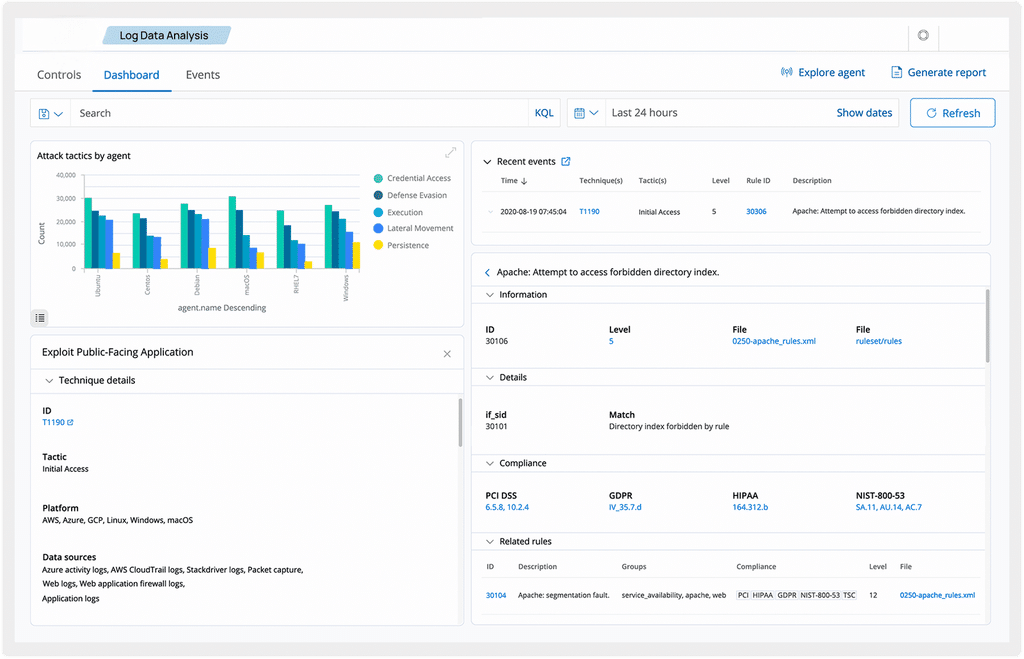
Used well, Wazuh can help teams:
- Centralize security events and investigate activity across monitored systems.
- Detect changes to important files and configurations.
- Identify vulnerabilities and assess security configurations.
- Search and review security data through dashboards and reports.
- Build detections that reflect their environment and risk priorities.
Those capabilities are useful. They are not the same as a complete security operations function.
A dashboard does not determine whether an alert threatens your business. A detection does not automatically contain an incident. And collecting logs does not ensure that anyone is watching them at the moment something serious happens.
The organization still has to decide what data to collect, how long to keep it, which alerts matter, who investigates them, and what action to take. Wazuh provides tools. Your operating model determines what those tools deliver.
For an overview of the platform, see the Wazuh getting-started documentation.
OPEN SOURCE CHANGES THE COST MODEL. IT DOESN’T ERASE COST
A key attraction of self-hosted Wazuh is that licensing is not charged per monitored agent in the way many commercial security platforms price their service. That can make the platform appealing to organizations that want to monitor more endpoints without every additional agent increasing a software subscription bill.
But “no per-agent licensing fee” does not mean “free to operate.” A Wazuh deployment still has a total cost of ownership, and much of it shows up outside a license line item.
Infrastructure needs to support the work: compute for processing, storage for indexed events, and an appropriately designed Wazuh Indexer environment. Data volume, search performance, retention periods, resilience, and backup requirements all affect capacity planning.
Engineering time is needed to deploy the platform, onboard data sources, configure agents, secure access, and plan for growth. Teams also need to maintain the environment, manage upgrades, monitor platform health, and troubleshoot failures.
Detection work continues after deployment. Rules and thresholds need testing against real activity. Integrations need attention when source systems or formats change. Teams must review false positives, investigate genuine alerts, and adjust coverage as their infrastructure evolves.
Commercial SIEM costs often make ingestion volume and subscriptions prominent. With self-hosted Wazuh, more of the investment may shift toward internal labor and infrastructure. That is not necessarily a disadvantage. It is a different cost structure. The right comparison includes all the work required to deliver useful, reliable monitoring, not just the software license.
Before choosing a model, ask: Who owns the platform, the detections, and the response when the system raises a serious alert?
THE 5.0 RELEASE CANDIDATE: IMPORTANT, BUT NOT A PRODUCTION SHORTCUT
Wazuh’s 5.0.0-rc2 release was published on October 30, 2026, and is marked as a pre-release. As of November 9, organizations should treat it as a release candidate, not as a generally available production version.
The planned 5.0 changes are substantial. They include a new Wazuh Engine, a shift toward YAML-based Sigma detection rules, native event forwarding to the Wazuh Indexer that removes the Filebeat dependency, cluster-by-default deployment, and a clearer separation between agent and manager components.
That evolution is worth tracking, but it also makes migration planning important. Moving from 4.x to 5.0 is not an in-place upgrade: the release notes describe a fresh-install migration. Existing rule assets may require manual migration rather than automatic conversion.
For teams considering early evaluation, review the official Wazuh 5.0.0-rc2 release notes and the 4.x-to-5.x rules migration guide. Plan a test environment, verify integrations and custom rules, and document how you will validate the migration before changing production systems.
A release candidate is an opportunity to learn what is coming. It is not a reason to skip production-readiness checks.
STRONG DETECTION STILL NEEDS HUMAN CONTEXT
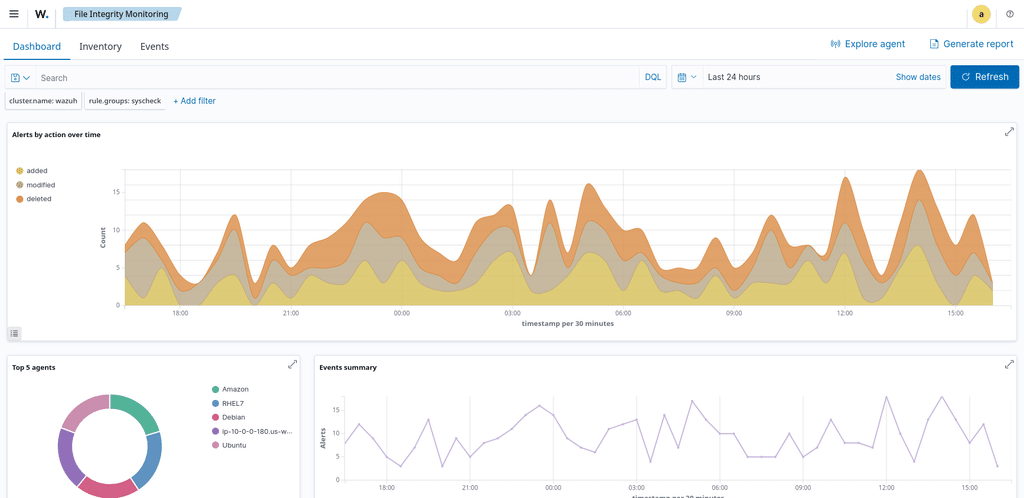
Wazuh includes useful capabilities for visibility and investigation. For example, File Integrity Monitoring can identify changes to monitored files and help teams investigate whether those changes are expected. But a change is a signal, not a verdict. Updates, approved administration, and attacker activity can all affect files. Context determines what the event means.
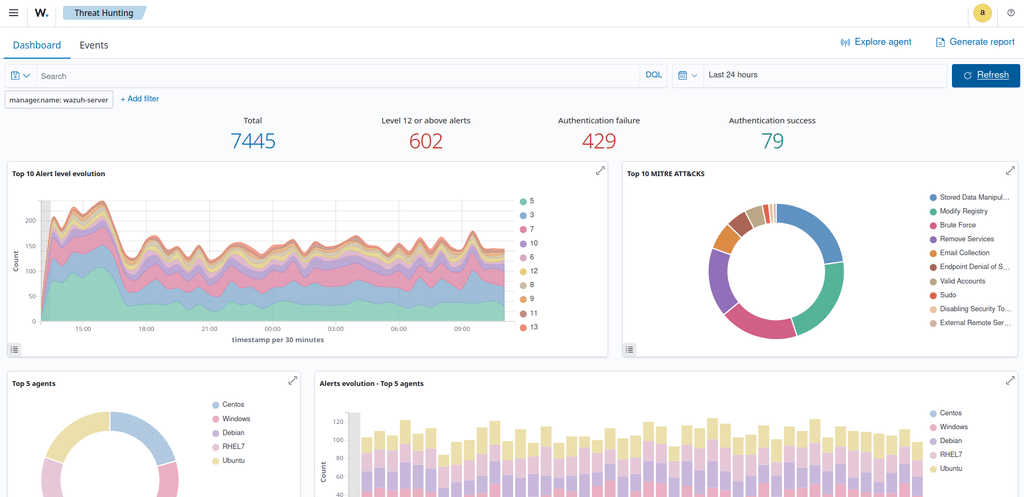
The same principle applies to threat hunting. A security platform can surface activity and provide a place to investigate it, but analysts still need to connect events to users, assets, business processes, and other evidence.
That is why the phrase “turnkey security” deserves scrutiny. Useful monitoring requires more than installing agents and opening a dashboard. It requires dependable coverage, tested detections, an escalation path, and people responsible for acting when an incident is credible.
OPEN SOURCE OR MANAGED? THE QUESTION IS WHO DOES THE WORK
Building and running Wazuh internally can be a good fit when an organization has the expertise and capacity to own the platform over time. A managed model can be a better fit when that operational burden is difficult to staff, or when a team wants security monitoring without having to build a round-the-clock response function itself.
Managed does not mean “no customer involvement.” Your organization still provides business context, defines escalation contacts, and makes decisions about response. The difference is that platform operations and continuous alert monitoring do not have to rest entirely on your internal team.
At Cenova Cyber, we use Wazuh within a broader managed security monitoring service with 24/7 SOC support. The goal is not to hand you a stack and leave you to babysit it. It is to help turn telemetry into investigated, prioritized security events, so your team can focus on business operations and informed decisions.
A WEEK OF PRACTICAL WAZUH QUESTIONS
This post opens our Wazuh-focused series for November 9–15. Over the week, we’ll look beyond licensing to the parts that determine whether a deployment works in practice:
- Monday: Agent architecture and the realities of deployment.
- Tuesday: File Integrity Monitoring and threat detection.
- Wednesday: Compliance reporting, and what reports can and cannot prove.
- Thursday: Detection tuning and the ongoing fight against false positives.
- Friday: The build-versus-managed decision.
- Saturday: Identity and monitoring integration.
- Sunday: An honest verdict on where Wazuh fits.
Open source gives organizations control and cost flexibility. It also makes the question of operational ownership impossible to ignore. If the expertise, staffing, and response process do not exist internally, those needs still have to be met.
Get a monitoring consultation. Talk with Cenova Cyber about Wazuh-powered SIEM, 24/7 SOC monitoring, and an approach sized to your environment. Schedule a free security consultation or learn more about Cenova Cyber security monitoring.