
The First Hour Decides the Breach: What Happens When the SOC Calls at 2 AM

At 2 AM, a security alert is only the beginning. A SOC analyst may detect suspicious activity, but the organization’s next decisions determine whether the event stays contained, or spreads into a business-disrupting breach.
Those decisions should not be made for the first time during an incident. Who can authorize endpoint isolation? Can the SOC contain a threat immediately, or must it wait for an executive? Where will the response team communicate if email is compromised? The answers need to be agreed, documented, and tested in advance.
Incident response is not improvised during the first hour. It is prepared months earlier.
THE FIRST HOUR: A PRACTICAL TIMELINE
This timeline is a working model, not a guarantee that every incident follows the same sequence. Responders must adapt to the threat, business impact, available evidence, and the organization’s response plan. The goal is to contain risk while preserving the information needed to understand what happened.
0–5 MINUTES: DETECT, TRIAGE, AND OPEN THE RESPONSE
The analyst validates the alert and determines whether it indicates a credible security incident. They record the time detected, affected devices and accounts, alert details, and actions already taken. The incident lead and designated technical contacts are notified through an established channel.
At this point, the response team needs to answer one urgent question: Who has authority to act? If the plan requires an executive who is unavailable at 2 AM to approve routine isolation, containment may be delayed. Conversely, an unclear mandate can lead to disruptive action on a critical system without the right business owner involved.
Set this authority in advance. Define which actions the SOC can take immediately, which require a designated approver, and how responders escalate if that person cannot be reached.
5–15 MINUTES: CONTAIN THE THREAT, WITHOUT NEEDLESSLY DESTROYING EVIDENCE
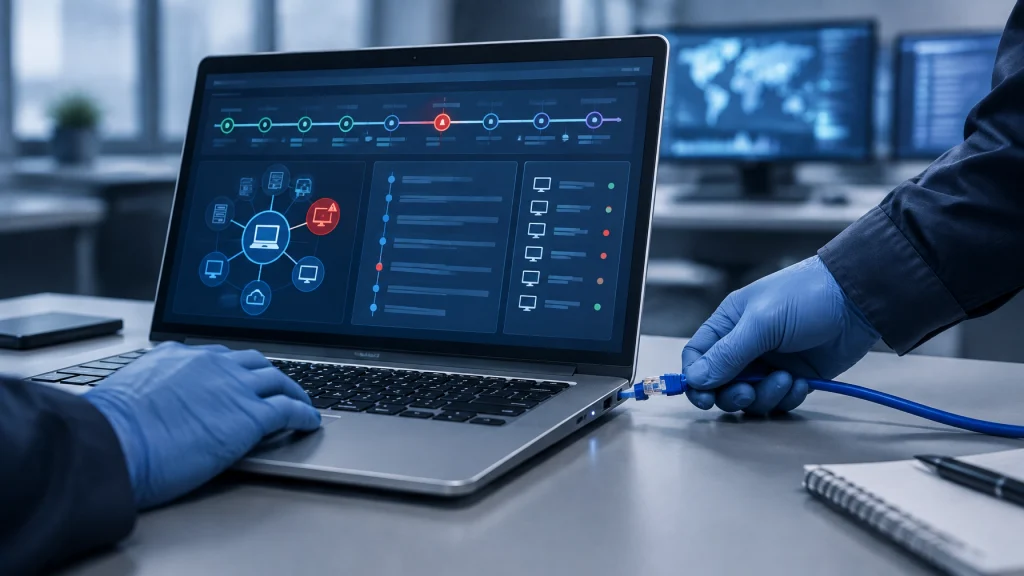
If an endpoint is compromised, isolating it from the network can help limit further activity. Depending on the environment and response plan, that may mean using EDR isolation, a network control, or another approved method. Isolation is not the same as powering the machine off.
A powered-off device loses volatile information held in memory. That information may help responders understand what was running, which connections were active, or how the attacker operated. Where practical, preserve volatile evidence before destructive actions, using qualified responders and a process that documents what was collected. But do not let evidence collection prevent urgent containment when the threat is actively spreading.
CISA’s StopRansomware Guide advises isolating impacted systems and warns that powering down can eliminate evidence in volatile memory. It recommends powering down only when other ways to disconnect a device from the network are not available.
15–30 MINUTES: REVOKE ACCESS, NOT JUST PASSWORDS
A password reset alone may not end an attacker’s access. Depending on the incident, the response team may need to revoke active sessions and refresh tokens, disable a compromised account, remove unauthorized authentication methods, revoke malicious app permissions, or rotate exposed API keys and service-account credentials.
These actions should be performed through a known-clean administrative path. The team also needs to protect legitimate emergency access: avoid disabling the only recovery or break-glass account without a safe alternative.
The identity response plan should name who can approve these changes, how they will be carried out after hours, and which logs need to be preserved before their retention window expires.
30–60 MINUTES: SCOPE, PROTECT, AND CHECK THE CLOCK
The first device that triggered an alert may not be the only one involved. Responders investigate for related accounts, endpoints, cloud activity, persistence, and lateral movement. They also assess whether critical services, including backup infrastructure, are reachable or at risk.
Backup separation is a preparation decision, not a first-hour fix. If backups share credentials or access paths with the production domain, an attacker with elevated privileges may be able to reach them. The incident plan should identify backup ownership, recovery access, and the steps required to protect backups without making an untested change during a crisis.
The incident lead should then check the organization’s notification obligations. There is no universal one-hour notification deadline for every private business. Requirements depend on the organization, incident, jurisdiction, industry, contracts, and insurance policy. Some U.S. federal agencies have one-hour reporting requirements; SEC-reporting companies have specific disclosure rules when an incident is determined to be material; and GDPR may require notification within 72 hours where applicable. Consult legal counsel and use a prepared obligations list, do not assume one deadline applies to every incident.
FIVE DECISIONS TO MAKE BEFORE THE SOC CALLS
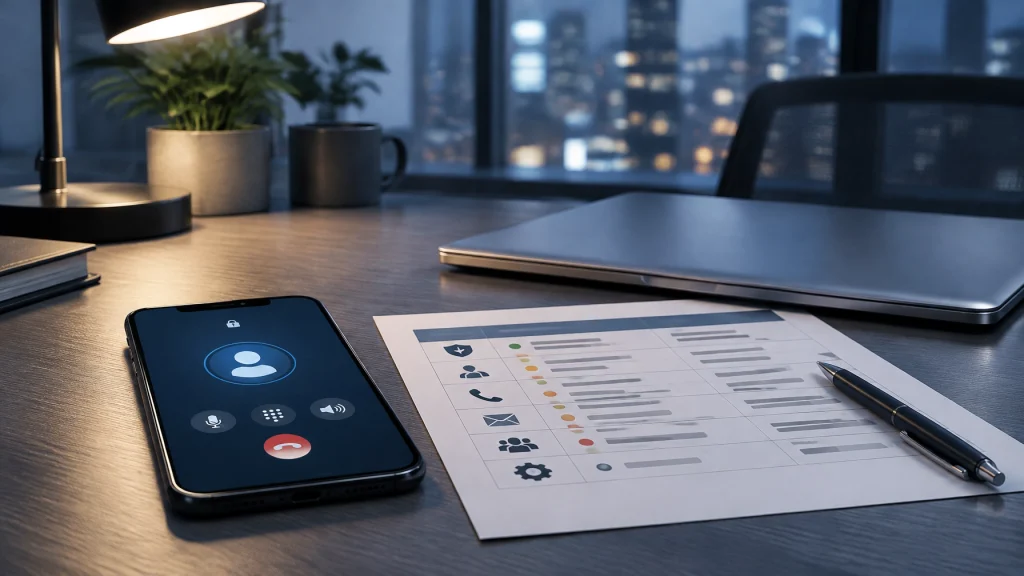
The response plan should turn uncertainty into clear, approved actions:
- Containment authority: Which actions can the SOC take immediately? Who can approve higher-impact steps, and who is the backup approver?
- EDR response mode: Which threats trigger automated containment? Which actions require analyst judgment or customer approval? Who receives and acknowledges escalations after hours?
- Communications: What out-of-band channel will responders use if email, identity, or collaboration tools may be compromised? Who has the contact list, and is it accessible offline?
- Forensics and insurance: Which incident-response or forensic provider is engaged? Does the insurer require notification, prior approval, or use of a panel provider? Keep relevant contacts and policy instructions accessible.
- Critical systems and backups: Which services must be protected first? Are backups sufficiently separated, and who can verify that recovery access is available?
Put these decisions in writing and make sure the people responsible can find the plan without signing in to a potentially compromised environment. NIST’s SP 800-61 Rev. 3 emphasizes integrating incident response into broader cybersecurity risk management. A plan that nobody can locate or execute at 2 AM is not ready.
A ONE-PAGE FIRST-HOUR CHECKLIST
Complete this with your IT, security, leadership, legal, and business contacts. Store it somewhere accessible if email or your normal identity system is unavailable.
Incident leadership
- Incident lead: ____________________ | After-hours number: ____________________
- Backup lead: ____________________ | Escalation time if no response: ____________
- SOC authority for immediate isolation: ______________________________________
Containment and evidence
- EDR isolation enabled and tested? Yes / No
- Actions requiring approval: _________________________________________________
- Evidence contact / forensic retainer: ________________________________________
- Do not power off, reboot, reimage, or wipe affected systems until: _______________
Identity and communication
- Known-clean administrative access method: ___________________________________
- Session, token, application, and service-account revocation owner: ______________
- Out-of-band response channel and contact location: ____________________________
Business, insurance, and notifications
- Critical services and backup owner: _________________________________________
- Insurer notification instructions and contact: _________________________________
- Legal/privacy contact and notification-obligations reference: ___________________
- Decision log location and incident timekeeper: ________________________________
Run through the list with the people named on it. Confirm the phone numbers work. Check that the SOC, IT team, and leadership agree on who can make each decision. A short tabletop exercise can reveal gaps before a real alert does.
PREPARE THE RESPONSE BEFORE THE ALERT
Cenova Cyber’s MDR and endpoint protection service provides 24/7 SOC monitoring and response. Effective after-hours response depends on agreed escalation paths and containment authority, so the right people know what the SOC can do immediately and when it must reach your team. Explore our security monitoring services to see how around-the-clock monitoring can support your security operations.
Our vCISO services can help organizations develop incident response plans, establish decision authority, and prepare communication and escalation procedures. The aim is practical: reduce uncertainty so your team can act quickly while protecting critical operations and evidence.
Contact Cenova Cyber for an incident readiness review. We’ll help you identify the decisions that need to be made before the next after-hours alert, and build a plan your team can use when time matters. Schedule a security assessment.