
SOC as a Service vs. Building Your Own: The Real Math Behind 24/7 Coverage in 2026

Security threats do not follow business hours. Attackers move at night, on weekends, and during holidays, when your internal IT team is smallest and your response options are limited.
That creates a strategic question for every growing organization:
Should you build an in-house 24/7 Security Operations Center, or partner with a managed SOC/MDR provider?
In 2026, the answer depends on more than the price of a security platform. You must account for staffing, hiring timelines, employee turnover, technology management, overnight coverage, incident response, and the operational burden of running a security program around the clock.
For most organizations with up to 2,000 employees, SOC as a Service or Managed Detection and Response delivers faster coverage and stronger economics, without requiring a multimillion-dollar security operation.
THE 2026 COST REALITY: 24/7 SECURITY IS A STAFFING PROBLEM FIRST
A true 24/7 SOC requires more than a dashboard and an alert inbox. It requires enough qualified people to cover shifts, vacations, sick leave, training, turnover, escalation, and management responsibilities.
For a mid-market organization, an in-house 24/7 SOC commonly requires:
- 8–14 full-time security professionals
- Security analysts across multiple shifts
- A SOC manager or security operations leader
- Detection engineers and SIEM administrators
- Incident response and threat-hunting expertise
- Ongoing training and certification
- Coverage for nights, weekends, holidays, and employee leave
That staffing model drives the majority of the cost.
Add SIEM, EDR, SOAR, threat intelligence, log storage, integrations, infrastructure, and compliance reporting, and the annual investment can quickly reach $1.2 million to $4 million.

By comparison, a managed SOC or MDR service typically costs approximately $50,000 to $800,000 annually, depending on endpoint count, log volume, response requirements, compliance needs, and service tier.
For organizations with fewer than 5,000 endpoints, managed coverage is often 60%–85% less expensive than building and operating an equivalent in-house function.
The exact number varies. The economic direction does not.
THE HIDDEN COSTS OF BUILDING YOUR OWN SOC
1. HIRING TAKES LONGER THAN THE BUSINESS PLAN
Security operations talent remains difficult to recruit and retain. Building a complete team does not happen after posting a few job openings.
Organizations commonly face a 12–24 month timeline to recruit, onboard, train, and stabilize a fully staffed 24/7 SOC.
During that period, your organization may have:
- Partial coverage instead of true 24/7 monitoring
- Analysts working excessive overtime
- Delayed detection engineering
- Unresolved alert backlogs
- Security gaps during recruiting and onboarding
- Increased reliance on internal IT staff
Threats do not wait for your hiring plan to finish.
2. ATTRITION CREATES COVERAGE GAPS
A SOC is only as reliable as the team operating it. When one experienced analyst leaves, the impact extends beyond the vacant position.
The remaining team must cover additional shifts, manage more alerts, and train the replacement. That increases burnout risk and creates a cycle of turnover.
A managed SOC absorbs much of this staffing volatility. The provider maintains a larger bench of analysts, responders, engineers, and security leaders so one resignation does not remove an entire capability from your program.
3. TOOL SPRAWL ERODES THE BUDGET
An in-house SOC typically requires several security platforms:
- SIEM and log management
- EDR or XDR
- SOAR and automated playbooks
- Threat intelligence feeds
- Vulnerability management
- Case management
- Identity and cloud monitoring
- Network detection tools
- Long-term data retention
Each tool creates licensing costs, integration work, maintenance requirements, training needs, and renewal decisions.
More tools do not automatically create better security. Without skilled people to tune detections and investigate alerts, organizations often create more noise, not more protection.
4. ON-CALL BURNOUT IS A BUSINESS RISK
Many organizations describe their security program as “24/7” when it actually depends on a small group of employees responding to after-hours alerts.
That is not sustainable coverage. It is an escalation plan built on personal sacrifice.
Continuous on-call requirements affect morale, retention, response quality, and decision-making. A tired analyst is more likely to miss context, delay containment, or escalate incorrectly.
A real 24/7 operation requires dedicated shift coverage, not an informal expectation that someone will check alerts after dinner.
WHAT MANAGED MDR CHANGES
Managed Detection and Response shifts the operational model from owning every security function to accessing a mature security operation when you need it.
Cenova Cyber’s MDR with SOC service provides an always-on extension of your team, including:
- 24/7/365 continuous monitoring
- Proactive threat hunting
- Behavioral analytics supported by AI and human expertise
- Rapid incident response and containment
- Endpoint, network, and cloud monitoring
- Threat intelligence and detection tuning
- Compliance-ready reporting
- Support for internal IT teams and existing providers
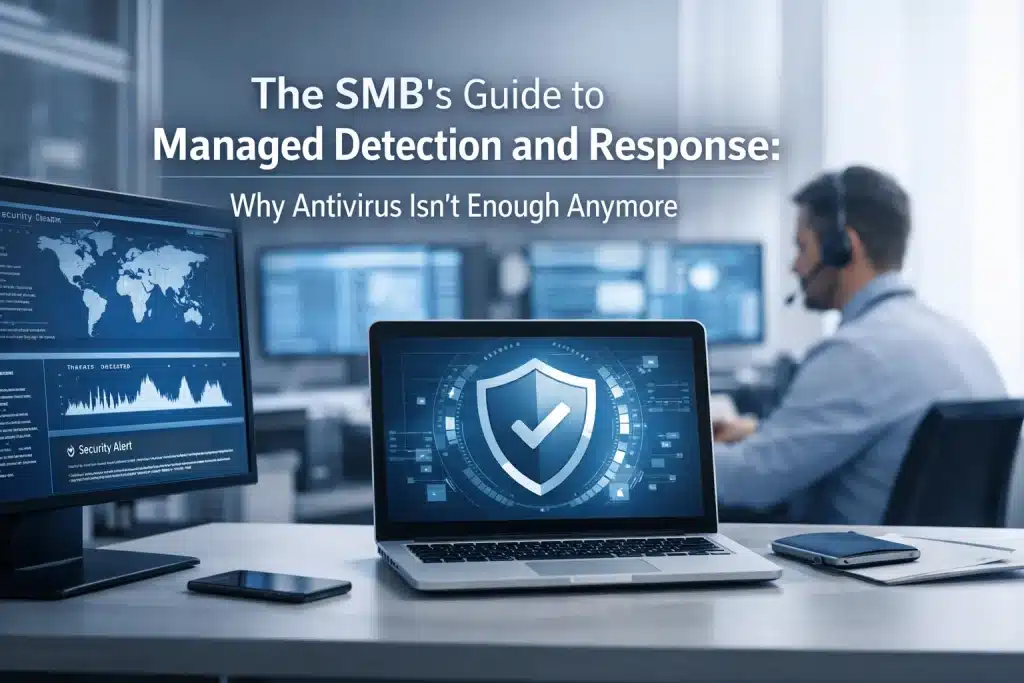
The objective is not to replace your IT team. It is to give them specialized security expertise and operational capacity, so they can focus on business systems, users, infrastructure, and strategic priorities.
Managed MDR also reduces the time required to reach meaningful coverage. Instead of spending 12–24 months building the team, organizations can begin onboarding in weeks, depending on environment complexity and service requirements.
That speed matters. Every month without effective monitoring is another month in which an attacker can operate undetected.
THE HYBRID MODEL: A PRACTICAL MIDDLE GROUND
Not every organization needs to choose between a completely internal SOC and fully outsourced security operations.
A hybrid model can combine:
- Internal ownership of security strategy and business priorities
- Managed 24/7 monitoring and response
- Internal investigation for high-priority incidents
- Provider-supported threat hunting
- Shared detection engineering
- Outsourced overnight and holiday coverage
- Executive reporting and compliance support

This approach works well when an organization has a capable IT or security team but lacks the staffing, tools, or resources to maintain continuous operations.
Your internal team keeps control of risk decisions. Your managed SOC supplies the depth, coverage, and response capacity that is difficult to maintain alone.
WHEN DOES BUILDING AN IN-HOUSE SOC MAKE SENSE?
An in-house SOC may be appropriate for organizations that:
- Operate at significant enterprise scale
- Have complex regulatory or national security requirements
- Need highly customized internal workflows
- Can consistently fund $1.2 million–$4 million in annual operations
- Can recruit and retain experienced SOC analysts
- Have the infrastructure to manage SIEM, EDR, SOAR, and intelligence platforms
- Are prepared to manage 24/7 staffing, performance, training, and succession
For everyone else, the business case deserves serious scrutiny.
A large security budget does not automatically produce resilient security. Coverage, expertise, response speed, and operational discipline matter more than owning the tools.
MAKE 24/7 SECURITY A BUSINESS ADVANTAGE
The right security operating model protects more than systems. It protects business continuity, customer trust, compliance posture, and leadership focus.
Cenova Cyber helps organizations up to 2,000 employees access enterprise-grade monitoring and response without building a multimillion-dollar SOC from the ground up.
Stop carrying the full cost of 24/7 security alone. Contact Cenova Cyber for a free security consultation. We will review your environment, estimate the coverage required, and show you where SOC as a Service or MDR can reduce risk, accelerate response, and provide practical protection around the clock.
GET THE REAL MATH FOR YOUR ORGANIZATION
Schedule your free consultation today and discover whether managed MDR, a hybrid model, or an in-house SOC is the right fit for your business.