
Security Risk Assessment 101: What Actually Goes Into a Proper Assessment (No Fluff)

Most business owners treat a Security Risk Assessment (SRA) like a trip to the dentist. They know they need it, they dread the process, and they just want it over with so they can get back to “real work.”
STOP TREATING YOUR SECURITY LIKE A CHORE.
A proper SRA is not a technical checkbox. It is a high-level strategic roadmap. It is the difference between blindly throwing money at the latest security gadgets and making calculated, ROI-driven investments that actually protect your bottom line. At Cenova Cyber, we don’t just “run a scan.” We perform a deep-dive analysis of your business DNA to identify where you are vulnerable and how to fix it before a threat actor does it for you.
Whether you are an SMB in Tampa or a nationwide organization with 2,000 employees, you need to know what is actually happening during a professional assessment. No fluff, just the facts.
STEP 1: DEFINE THE BATTLEFIELD – SCOPE AND OBJECTIVES
You cannot protect what you haven’t defined. A “proper” assessment begins by drawing a line in the sand. We sit down with your leadership, not just your IT guy, to understand what your business actually does and what systems are critical to your survival.
STRATEGIC CLARITY – PROVEN RESULTS
We define the scope by asking the hard questions:
- Which applications drive your revenue?
- Where is your most sensitive customer data stored?
- Are we looking at your local Tampa office, your remote workforce, or your entire cloud infrastructure?
If an assessor starts running tools without understanding your business objectives, they aren’t assessing risk, they’re just making noise. We ensure the assessment is tailored to your specific industry requirements, whether that is HIPAA compliance or preparing for Cyber Insurance Renewals.
STEP 2: CATALOG THE CROWN JEWELS – ASSET INVENTORY
A common mistake? Assuming you know what you have. Most organizations have “shadow IT”, unauthorized cloud apps, old servers tucked in closets, or personal devices accessing corporate data.
WE LEAVE NO STONE UNTURNED.
A professional SRA involves a structured inventory of:
- Information Assets: Customer records, intellectual property, financial data.
- Physical Assets: Laptops, servers, mobile devices, and IoT hardware.
- Software Assets: Critical SaaS applications and local legacy systems.
We classify these assets by importance. If your “Crown Jewels” are exposed, your business stops. We focus our energy there.
STEP 3: IDENTIFY THE THREATS – VULNERABILITY ANALYSIS
Once we know what we are protecting, we look at who wants to take it and how they might get in. This isn’t just about hackers in dark basements. We look at the “Three Pillars of Threat”:
- EXTERNAL THREATS: Ransomware groups, phishing campaigns, and opportunistic scanners.
- INTERNAL THREATS: The disgruntled employee or, more commonly, the well-meaning staffer who clicks a bad link because they haven’t had proper training.
- ENVIRONMENTAL THREATS: For our Tampa partners, this means hurricanes and power grid failures. If your data center is in a flood zone with no backup, that is a security risk.
We pair automated technical scanning with manual expert review. Why? Because tools miss “logical” vulnerabilities, like a manager sharing a password on a sticky note or an outdated HIPAA policy that leaves you legally exposed.
STEP 4: CALCULATE THE IMPACT – LIKELIHOOD VS. DAMAGE
This is where the “No Fluff” rule really hits home. Every business has thousands of vulnerabilities. If you try to fix them all, you will go broke.
WE PRIORITIZE BY BUSINESS IMPACT.
We use a simple but powerful matrix: Risk = Likelihood x Impact.
- High Likelihood + High Impact: These are your “Fire Drills.” Stop everything and fix these now.
- Low Likelihood + High Impact: These are your “Insurance Risks.” You might not be able to prevent them entirely, but you must have a plan to survive them.
- High Likelihood + Low Impact: These are your “Operational Nuisances.” Fix them when budget allows.
By the end of this phase, you aren’t looking at a 300-page report of technical jargon. You are looking at a prioritized list of business risks that need your attention.

STEP 5: THE REMEDIATION ROADMAP – ACTIONABLE INTELLIGENCE
A professional SRA doesn’t just tell you that your house is on fire; it gives you the blueprints for the sprinkler system.
TRUSTED SOLUTIONS – PROVEN RESULTS
Our final deliverable is a Remediation Roadmap. This is a step-by-step guide that tells you exactly:
- What to fix first (Immediate Actions).
- What to fix in the next 90 days.
- What to budget for next year.
We provide cost-tiered options. Sometimes the fix is a simple configuration change that costs $0. Other times, it requires a strategic investment in Managed Detection and Response (MDR). We give you the data to make the right choice for your budget.
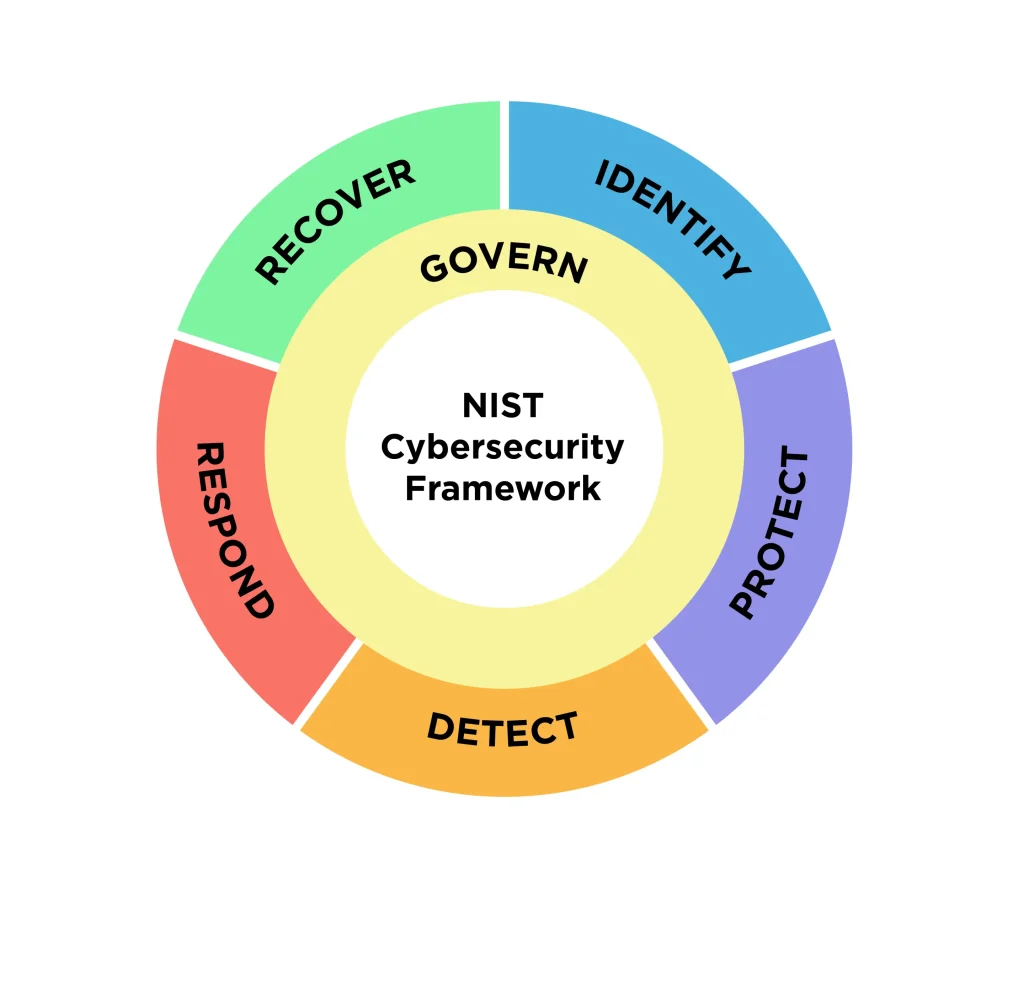
But a real roadmap does not stop at tools, patches, and point solutions. It also addresses the administrative controls that determine whether those technical fixes will hold up under pressure.
That means building or tightening:
- Policies and Procedures: Acceptable use, access control, incident response, vendor management, change management, and data handling.
- Governance and Accountability: Clear ownership for risk decisions, executive review cadence, exception tracking, and alignment with compliance requirements.
- Disaster Recovery and Business Continuity: Recovery priorities, backup validation, recovery time objectives, communication workflows, and tabletop testing so you can restore operations when systems go down.
In other words, Step 5 is where the assessment becomes operational. We turn findings into a practical plan for technology, people, and process—so you are not just reducing vulnerabilities, you are building a more resilient business.
WHY BUSINESS LEADERS CARE – IT’S NOT JUST IT
If you are a CEO or a business owner, you might be thinking, “Can’t my IT guy just do this?” The answer is usually no. IT is about functionality; Security is about risk.
WATCH YOUR BUSINESS SOAR.
A professional, third-party SRA provides:
- INSURANCE ELIGIBILITY: Most carriers now require a formal SRA to even give you a quote. Without it, you are uninsurable or paying 3x the premium. Learn how to avoid Cyber Insurance Pitfalls.
- COMPLIANCE COMPLIANCE: Whether it’s HIPAA, CMMC, or SOC2, an SRA is the foundation of every regulatory framework.
- CLIENT TRUST: Your customers are starting to ask for your security posture. Being able to show a professional assessment report wins contracts.
- EXECUTIVE PEACE OF MIND: You can finally stop wondering “if” you are secure and start knowing “how” you are protected. Many SMBs find that hiring a vCISO is the most cost-effective way to manage this ongoing.
THE CENOVA CYBER ADVANTAGE
We are more than just a vendor. We are your tactical partners in the fight against cyber threats. Based in Tampa but serving organizations nationwide, Cenova Cyber brings over two decades of experience to the table. We don’t hide behind technical complexity. We speak the language of business.
FOCUS ON YOUR BUSINESS : NOT MONITORING LOGS.
Our assessments are thorough, transparent, and designed to move the needle. We don’t just hand you a report and walk away. We help you implement the changes, monitor the results, and stay resilient in an ever-changing threat landscape.
CONTACT US TODAY FOR A FREE CONSULTATION
Don’t wait for a breach to find out where your gaps are. A professional Security Risk Assessment is the smartest investment you can make in the longevity of your business.
SAY HELLO TO PEACE OF MIND.
Take the first step toward a more secure, more resilient future. Contact Cenova Cyber today to schedule your initial consultation. Let us show you what a proper assessment looks like: no fluff, just protection.