
HIPAA Overhaul 2026: Why OCR Enforcement Means You Can’t Wait Any Longer

If you’ve been running a medical practice or a healthcare-adjacent business for a while, you know the routine. HIPAA compliance used to feel like a “check-the-box” annual chore: something you’d brush off once a year, file away the paperwork, and hope the Office for Civil Rights (OCR) never knocked on your door.
But it’s Wednesday, April 8, 2026, and the game has officially changed.
The grace period for the most significant HIPAA Security Rule overhaul in two decades is rapidly closing. With finalization expected by next month, the OCR isn’t just watching anymore: they are actively enforcing. We aren’t just talking about a slap on the wrist. We’re talking about a fundamental shift in how your data must be protected, monitored, and reported.
Whether you are a growing SMB right here in the Tampa area or a mid-market healthcare organization operating nationwide, the 2026 updates mean your current security posture is likely obsolete.
Here is exactly what’s happening, why the OCR is turning up the heat, and what you need to do TODAY to stay compliant and secure.
THE DEATH OF THE “ADDRESSABLE” LOOPHOLE
For years, the HIPAA Security Rule had a built-in “out.” Safeguards were categorized as either Required or Addressable. If a safeguard was “addressable,” businesses could essentially argue that it wasn’t “reasonable or appropriate” for their specific environment: as long as they documented why and implemented an alternative.
That era is over.
The 2026 update is moving the goalposts. Most of what used to be “addressable” is now becoming MANDATORY. This includes:
- Universal Encryption: No more excuses. All electronic protected health information (ePHI) must be encrypted both at rest and in transit.
- Multi-Factor Authentication (MFA): If you aren’t using MFA for every single login, you are technically out of compliance. OCR now views MFA as a baseline necessity, not an optional security layer.
- Vulnerability Scanning: Regular, automated scanning of your network is no longer a “nice-to-have” recommendation from your managed security service provider. It is a regulatory requirement.

At Cenova Cyber LLC, we’ve been preaching this for years: security isn’t a suggestion. If you haven’t implemented these foundational controls yet, you are currently sitting on a compliance time bomb. You can check out our FAQ on authentication to see how we help businesses navigate these transitions without disrupting their workflow.
THE 72-HOUR CLOCK: REPORTING AND RECOVERY
One of the most jarring changes in the 2026 overhaul is the new timeline for incident response. In the past, you had a relatively generous window to notify the HHS and patients about a breach.
Now? The OCR is tightening the leash. New requirements focus heavily on 72-hour reporting and recovery.
This doesn’t just mean you have to tell someone something happened; it means you need to have a documented, tested plan to recover that data within that same window. If a ransomware attack hits your Tampa clinic on a Friday afternoon, “figuring it out on Monday” is no longer an option.
OCR is now auditing organizations specifically on their Risk Management: not just their Risk Analysis. There is a massive difference between knowing you have a gap and actually having a risk management ristrategy that works in real-time.

OCR ENFORCEMENT: FROM AUDITS TO ACTION
If you think you can hide in the crowd, think again. As of early 2026, the OCR has already settled over 50 cases focused specifically on risk analysis and access enforcement. In 2024 alone, they collected over $6.6 million in fines.
The strategy has shifted. The OCR is no longer just waiting for a breach to happen before they investigate. They are conducting proactive audits of 50+ covered entities and business associates simultaneously.
Their top priorities for this year include:
- Security Risk Analysis: Do you actually have a current cybersecurity risk assessment?
- Mitigation Proof: If your assessment found a hole, did you fill it? The OCR is now asking for documented evidence that vulnerabilities were remediated: not just identified.
- Patient Access: Ensuring patients get their records on time is still a huge point of contention and a frequent source of fines.
Working with a firm that specializes in cybersecurity consulting is the only way to ensure your documentation matches your reality. If it isn’t written down and verified, the OCR treats it as if it never happened.
WHY THE SRA IS YOUR MOST POWERFUL WEAPON
At the heart of all this regulation is the Security Risk Assessment (SRA). This isn’t just a PDF you download and sign. A comprehensive SRA is a deep dive into every corner of your IT infrastructure.
As a managed security service provider, we see a lot of “lite” assessments that miss the mark. A real SRA must identify:
- Where all ePHI is stored (even the places you forgot about).
- Who has access to it (and why).
- What technical and physical safeguards are currently in place.
- The likelihood and impact of potential threats.
Without a current SRA, you are flying blind. And more importantly, you are in direct violation of the 2026 HIPAA Security Rule.
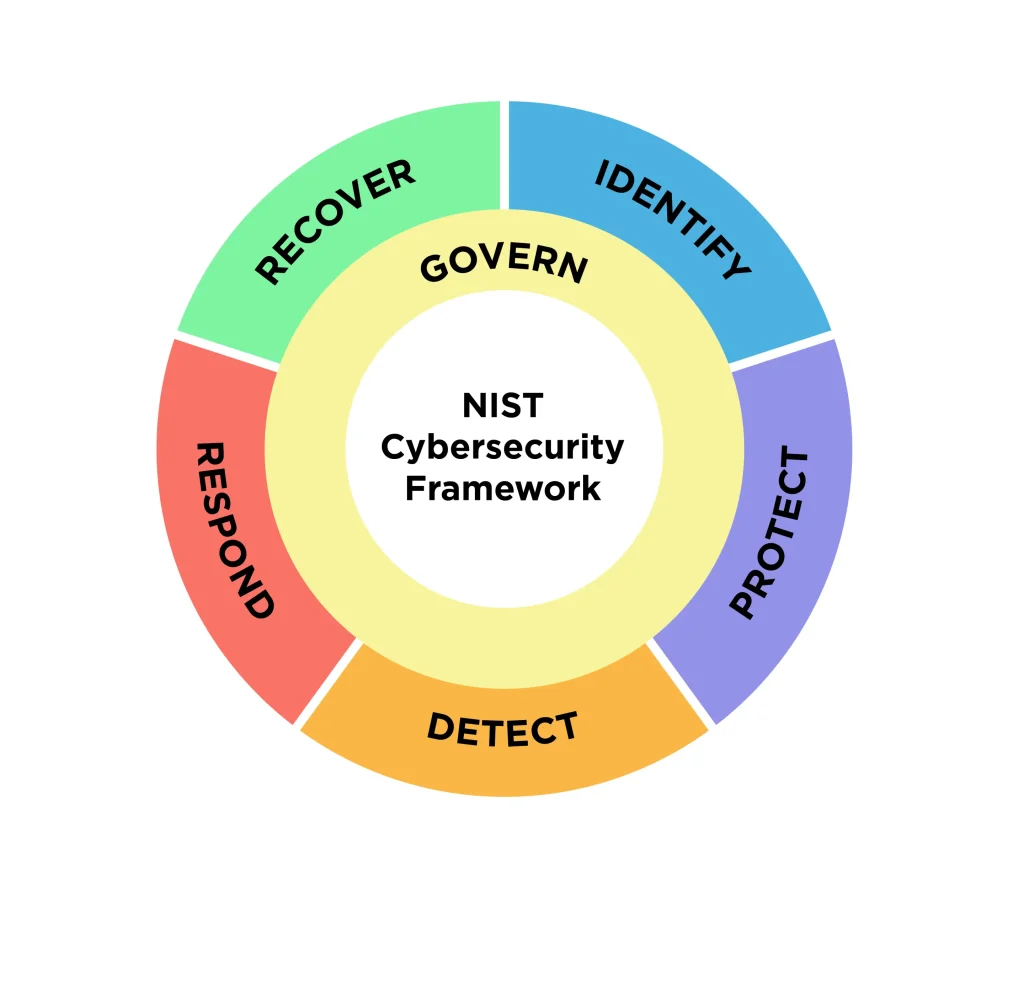
We align our assessments with the NIST Cybersecurity Framework, covering the six core functions: Govern, Identify, Protect, Detect, Respond, and Recover. This ensures that when we conduct your security risk assessments, you aren’t just meeting HIPAA’s minimum: you’re building a resilient business.
LOCAL FOCUS, NATIONAL PROTECTION
Whether you’re a local business in the Tampa Bay area or you’re managing multiple locations across the country, the threat landscape is the same. Bad actors don’t care about your zip code; they care about the value of your patient data on the dark web.
However, being a local managed cybersecurity services partner gives us a unique advantage. We understand the specific challenges facing Florida SMBs: from hurricane-related disaster recovery requirements to the nuances of local state privacy laws that overlay with federal HIPAA mandates.
But we don’t stop at the state line. Our reach is national, providing high-level vCISO services and MDR endpoint protection to organizations with up to 2,000 employees.
TRUSTED SOLUTIONS – PROVEN RESULTS
The complexity of the 2026 HIPAA overhaul can be overwhelming. We get it. You went into healthcare to help people, not to become a regulatory expert or a security engineer.
That’s where we come in.
Cenova Cyber LLC acts as your expert guide. We take the burden of compliance off your plate so you can focus on your patients. We don’t just give you a list of problems; we provide the WEAPONS OF CHOICE to defend your data and satisfy the OCR.
WHAT WE OFFER: THE 2026 HIPAA GAP ASSESSMENT
Don’t wait for a formal audit or a breach to find out where you stand. We are currently offering a specific 2026 HIPAA Overhaul Assessment. We will sit down with your team, review your current safeguards, and provide a clear roadmap to bridge the gap between your current state and the new mandatory requirements.
Our HIPAA Assessment includes:
- A full review of your MFA and Encryption status.
- An analysis of your 72-hour incident response and recovery plans.
- A documented Security Risk Assessment (SRA) that satisfies OCR standards.
- A strategy for continuous security monitoring to keep you compliant year-round.
THE TIME TO ACT IS NOW
The final rules are coming in May. The OCR is already in the field. The “addressable” excuses are gone.
If you haven’t updated your cybersecurity risk assessment in the last six months, you are likely out of step with the new 2026 reality. Don’t let your business become a statistic or a line item in an OCR enforcement report.
READY TO SECURE YOUR PRACTICE?
Let’s get ahead of the curve together. Contact us today for a consultation on the 2026 changes. Whether you need a one-time assessment or ongoing managed cybersecurity services, we have the expertise to keep your business resilient.
GET YOUR HIPAA COMPLIANCE CHECKUP TODAY
Focus on your patients: let us handle the logs, the audits, and the defense.
Stay safe,
Michael Whitcomb
CEO, Cenova Cyber LLC
Whether you need a full-scale Managed IT solution or a strategic Risk Management overhaul, we are here to help. Let’s move your business from a “Break-Fix” headache to a “Hassle-Free” future.
Contact Cenova Cyber Today for a comprehensive IT health check and see how we can turn your IT from an expense into your greatest asset.